Truck and trailer
Photograph the cab, trailer, plate, unit number, and any carrier identification from a safe place. A trailer may be owned or maintained by a different company.
Identify the vehicle, trip, company, and records that can disappear. This is general information, not a conclusion about any particular claim.
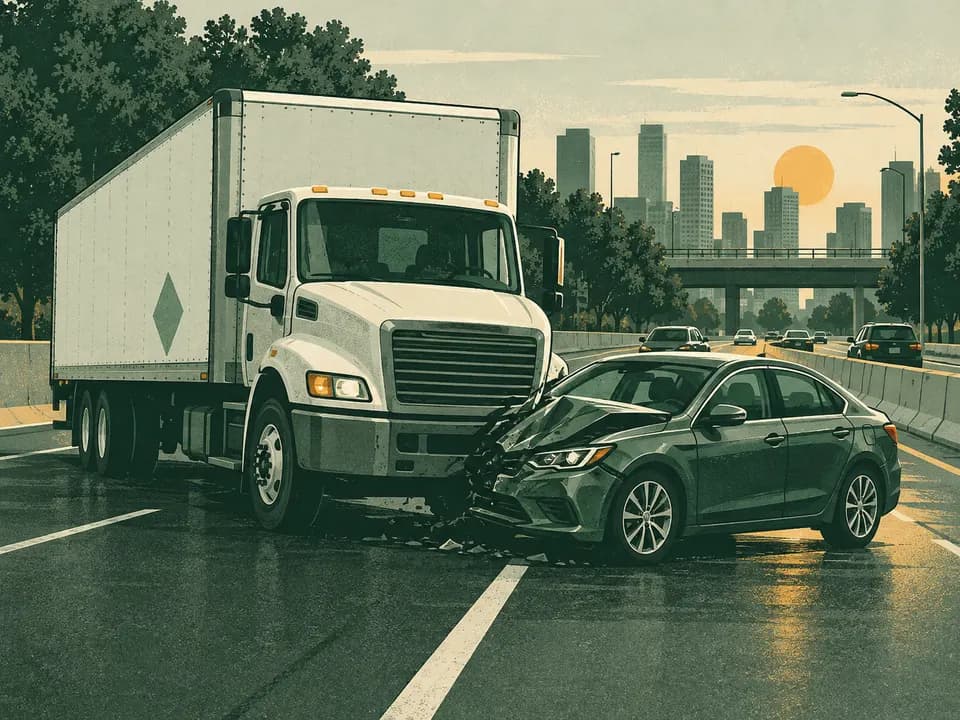
A commercial vehicle incident may involve a driver, carrier, delivery platform, shipper, or maintenance provider. A logo does not establish who owned, operated, or insured the vehicle. Record the vehicle identifiers and the exact time and location.
Seek care and make the appropriate crash report. Save scene and vehicle photos, witness information, delivery or trip details you already have, and the report number. Do not enter an unsafe roadway to gather evidence.
Driver records, dispatch information, vehicle inspection material, and camera footage may sit with different organizations. Their availability and relevance depend on the trip and governing rules.
Ask how the firm identifies the carrier and other parties, requests time-sensitive records, and handles commercial insurance questions.
Ask who would handle the work, whether the firm serves the relevant location, how it communicates, and what its written fee and expense terms mean if there is no recovery.
Photograph the cab, trailer, plate, unit number, and any carrier identification from a safe place. A trailer may be owned or maintained by a different company.
Save an order, delivery window, or tracking message only if it is already available to you. The company on a uniform or package does not alone identify the driver’s employer.
Record the precise road segment, lane, turn, traffic control, and time. A commercial route may cross several states, but the collision location remains important.
Keep original files where possible and label later notes as later notes. You can start with what you have; a firm can explain which missing records may matter.
These are possible record holders to ask about. Their involvement and the availability of any record need verification.
Crash report and vehicle identifiers
Trip, dispatch, driver, and inspection records if relevant
Ownership, maintenance, and policy information
Commercial vehicle matters can involve separate driver, carrier, owner, shipper, and maintenance records. Ask a firm who would identify the actual organizations and preserve relevant records promptly. Do not assume a particular record exists or is available.
NHTSA describes heavy-truck safety research. The page does not identify an operator or decide legal responsibility.
Hypothetical examples describe questions to investigate, not actual incidents or allegations. State rules and individual facts require review by a qualified lawyer.
Our mission is to make public information about personal injury law firms easier to find, understand, and verify. We organize factual directory records, practical legal education, and links to official sources so people can begin their research with greater clarity.
Our philosophy is accuracy before promotion, clarity before complexity, and corrections whenever reliable evidence shows that a listing has changed. Directory inclusion is informational and is never presented as a legal recommendation.