Road or bike lane
Record the lane marking, turning movement, parked vehicles, and direction of travel. Keep the bicycle and helmet in their post-event condition if possible.
Record the route, lane, bicycle condition, and vehicles or people involved. This is general information, not a conclusion about any particular claim.
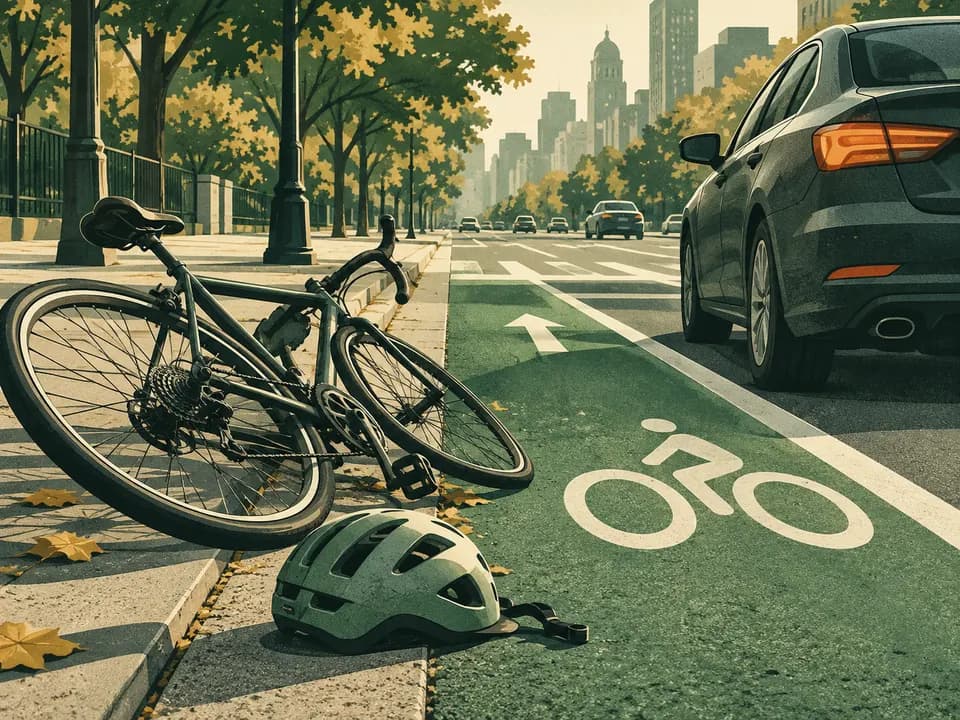
A bicycle event may involve a turning driver, door opening, trail encounter, surface condition, or organized ride. The setting determines who may have a report or maintenance record.
Get suitable care. Preserve helmet and bicycle condition, photos of the route and markings, witness details, vehicle information, and any crash or event report. Avoid repairing or discarding potentially relevant equipment until advised.
A driver, event organizer, property operator, or public road maintainer may be relevant depending on facts. A trail or painted lane does not automatically establish an unsafe condition.
Ask how the firm reconstructs the path of travel, preserves bicycle or camera evidence, and checks which state rules apply.
Ask who would handle the work, whether the firm serves the relevant location, how it communicates, and what its written fee and expense terms mean if there is no recovery.
Record the lane marking, turning movement, parked vehicles, and direction of travel. Keep the bicycle and helmet in their post-event condition if possible.
A path encounter may involve another cyclist, pedestrian, dog, event organizer, or surface condition. Name the path segment and nearest entrance.
If a component failed, keep the bicycle, product information, purchase or service record, and photographs. Do not assume the equipment caused the event.
Keep original files where possible and label later notes as later notes. You can start with what you have; a firm can explain which missing records may matter.
These are possible record holders to ask about. Their involvement and the availability of any record need verification.
Bicycle, helmet, route, and original photographs
Vehicle or event report and witness details
Marking, maintenance, or closure records if relevant
An investigation may consider a driver, road maintainer, event operator, or equipment maker. Which insurance or claim route exists depends on verified facts and state law.
NHTSA discusses bicycle safety and road use. Local rules and the event facts still need separate review.
Hypothetical examples describe questions to investigate, not actual incidents or allegations. State rules and individual facts require review by a qualified lawyer.
Our mission is to make public information about personal injury law firms easier to find, understand, and verify. We organize factual directory records, practical legal education, and links to official sources so people can begin their research with greater clarity.
Our philosophy is accuracy before promotion, clarity before complexity, and corrections whenever reliable evidence shows that a listing has changed. Directory inclusion is informational and is never presented as a legal recommendation.