Sidewalk or plaza
Use a street address, intersection, photo, and map pin to identify the exact panel or path. An area that looks public may have private maintenance.
Identify the exact park, sidewalk, library, facility, or transit space. This is general information, not a conclusion about any particular claim.
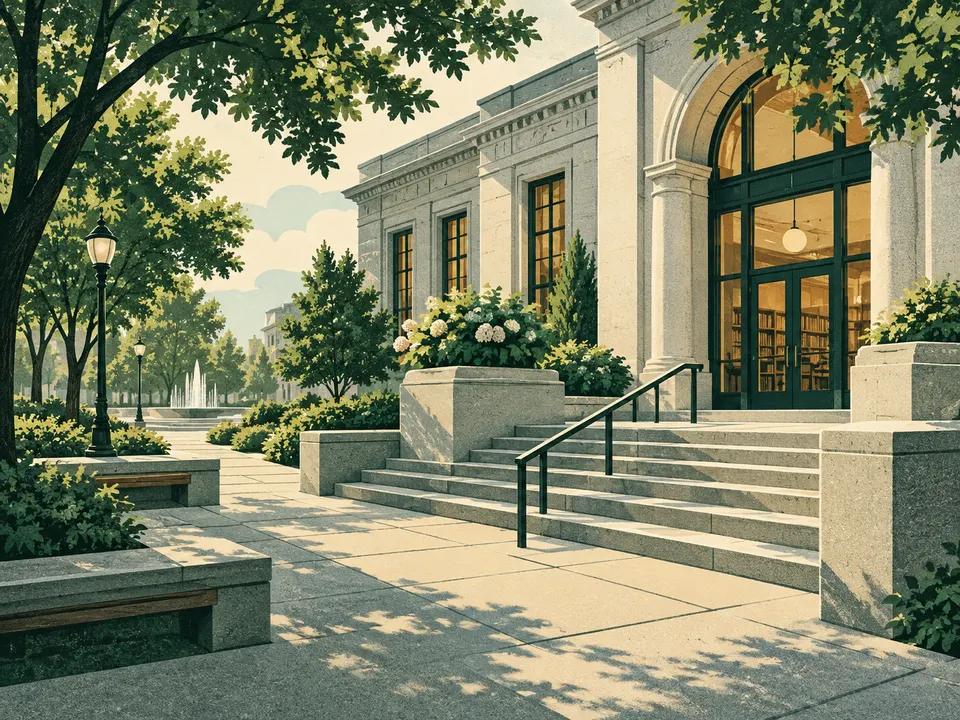
An area that looks public may be controlled by a city, county, state agency, school, transit operator, or private party. A dog encounter, trip, bicycle event, or school outing in a park can each raise different questions.
Get care and record the precise spot, activity, weather, lighting, photographs, witnesses, and the organization that received any report. Keep event or school communications when relevant.
The maintainer, event organizer, animal owner, or another person may hold different records. Government immunity or claim-presentation rules may apply to some claims, but the relevant state law must be checked.
Ask who maintained the location, what notice or immunity rules might apply, and how a lawyer would preserve public records promptly.
Ask who would handle the work, whether the firm serves the relevant location, how it communicates, and what its written fee and expense terms mean if there is no recovery.
Use a street address, intersection, photo, and map pin to identify the exact panel or path. An area that looks public may have private maintenance.
Record the trail, playground feature, facility, event, weather, and nearest entrance. The organizer and site operator may differ.
Identify the room, stairs, entrance, or equipment involved and the agency that received a report.
Keep original files where possible and label later notes as later notes. You can start with what you have; a firm can explain which missing records may matter.
These are possible record holders to ask about. Their involvement and the availability of any record need verification.
Incident or service-request reference
Permits, route, staffing, and video if relevant
Responsibility for the exact path, structure, or surface
Government notice and immunity questions vary by state and entity. The first task is identifying who controlled the place and what happened; a qualified local lawyer can assess whether a special procedure applies.
USA.gov state-government directory ↗
The directory helps locate official state authorities. Claim notice and immunity rules require a local legal review.
Hypothetical examples describe questions to investigate, not actual incidents or allegations. State rules and individual facts require review by a qualified lawyer.
Our mission is to make public information about personal injury law firms easier to find, understand, and verify. We organize factual directory records, practical legal education, and links to official sources so people can begin their research with greater clarity.
Our philosophy is accuracy before promotion, clarity before complexity, and corrections whenever reliable evidence shows that a listing has changed. Directory inclusion is informational and is never presented as a legal recommendation.